
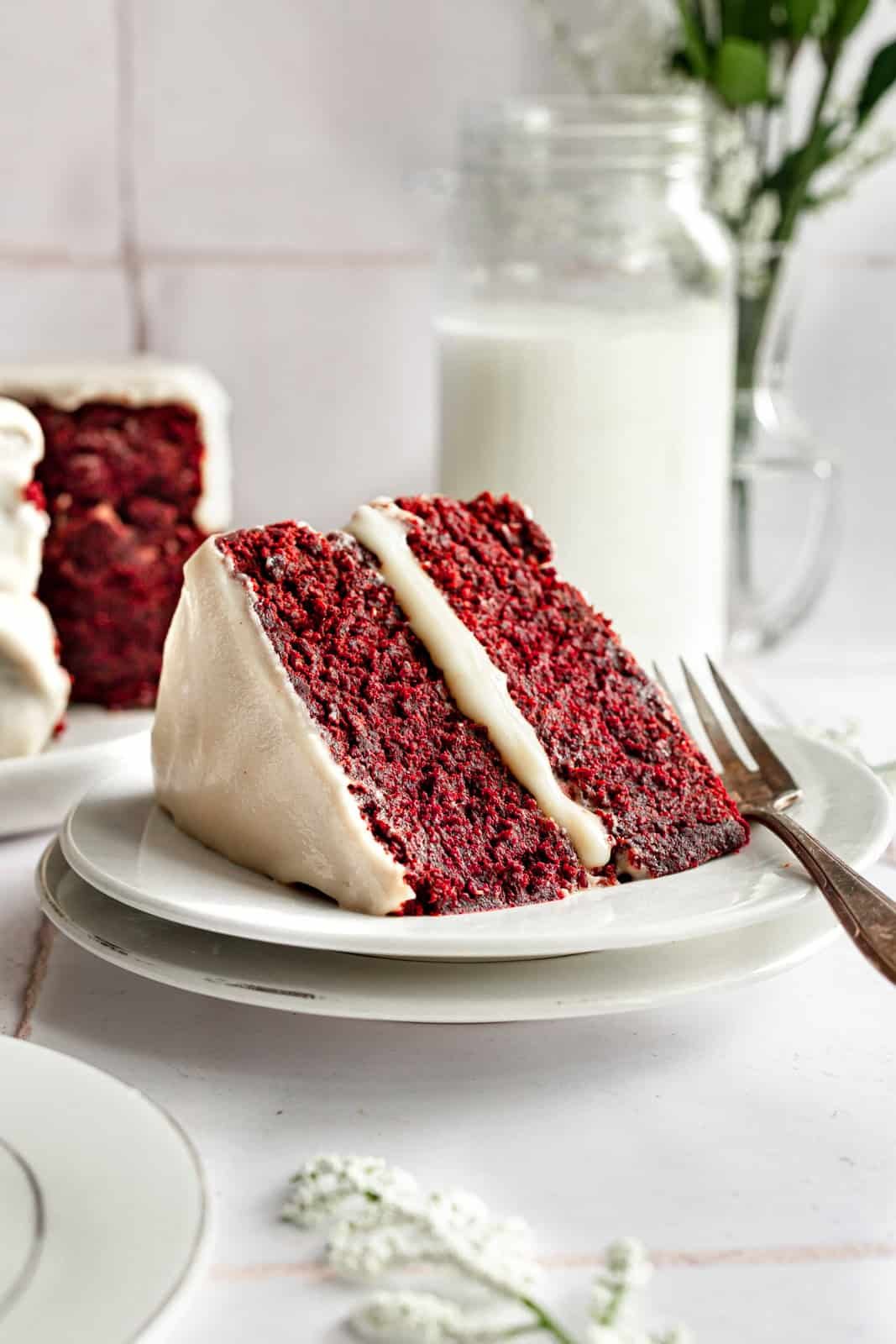
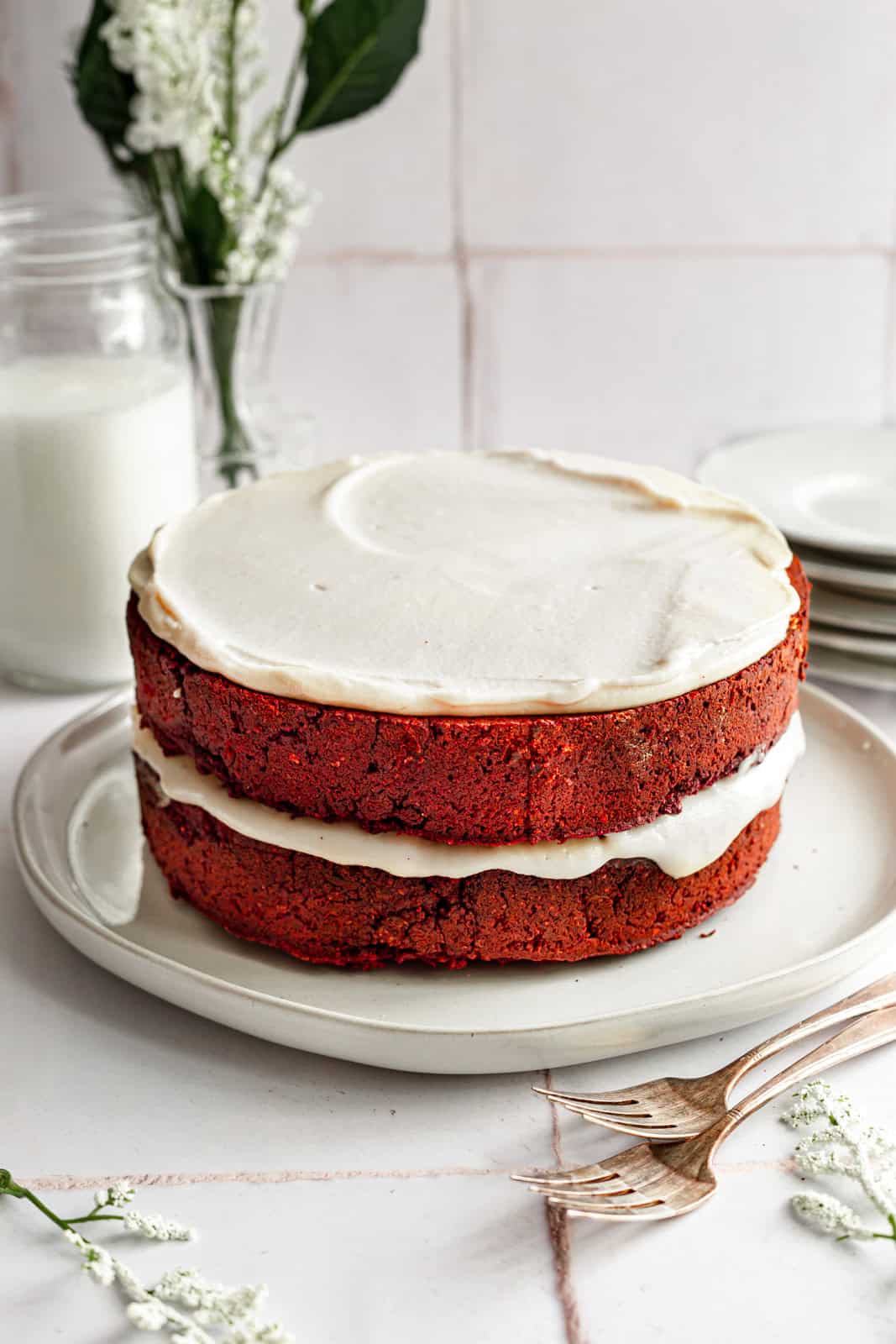
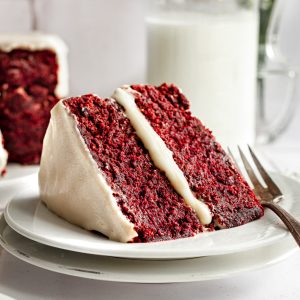
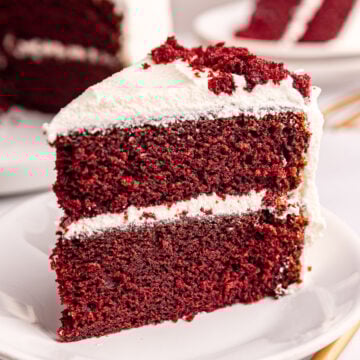
This Plant-Based Red Velvet Cake is made with whole food ingredients - no dyes or food coloring, no oils or refined sugars, and it's gluten-free. It's rich, fudgy and incredibly decadent. Perfect for birthdays, celebrations, and holidays.
Fun fact: I don't like chocolate cake. In fact, given the choice of chocolate or vanilla (insert dessert here: ice cream, cake, brownies, etc.) I would choose vanilla every time.
But red velvet is different. It has just that hint of richness from the chocolate, but is still basically vanilla cake.
Combine that with a rich cream cheese frosting and I'm sold.
So, when I was thinking about what dessert I wanted for my birthday (the day this post goes live) I knew I wanted to make red velvet cake.
I already have a red velvet cupcake recipe on the blog, but there's something much more decadent about an entire cake. Especially a layer cake. It feels birthday worthy.
Jump to:
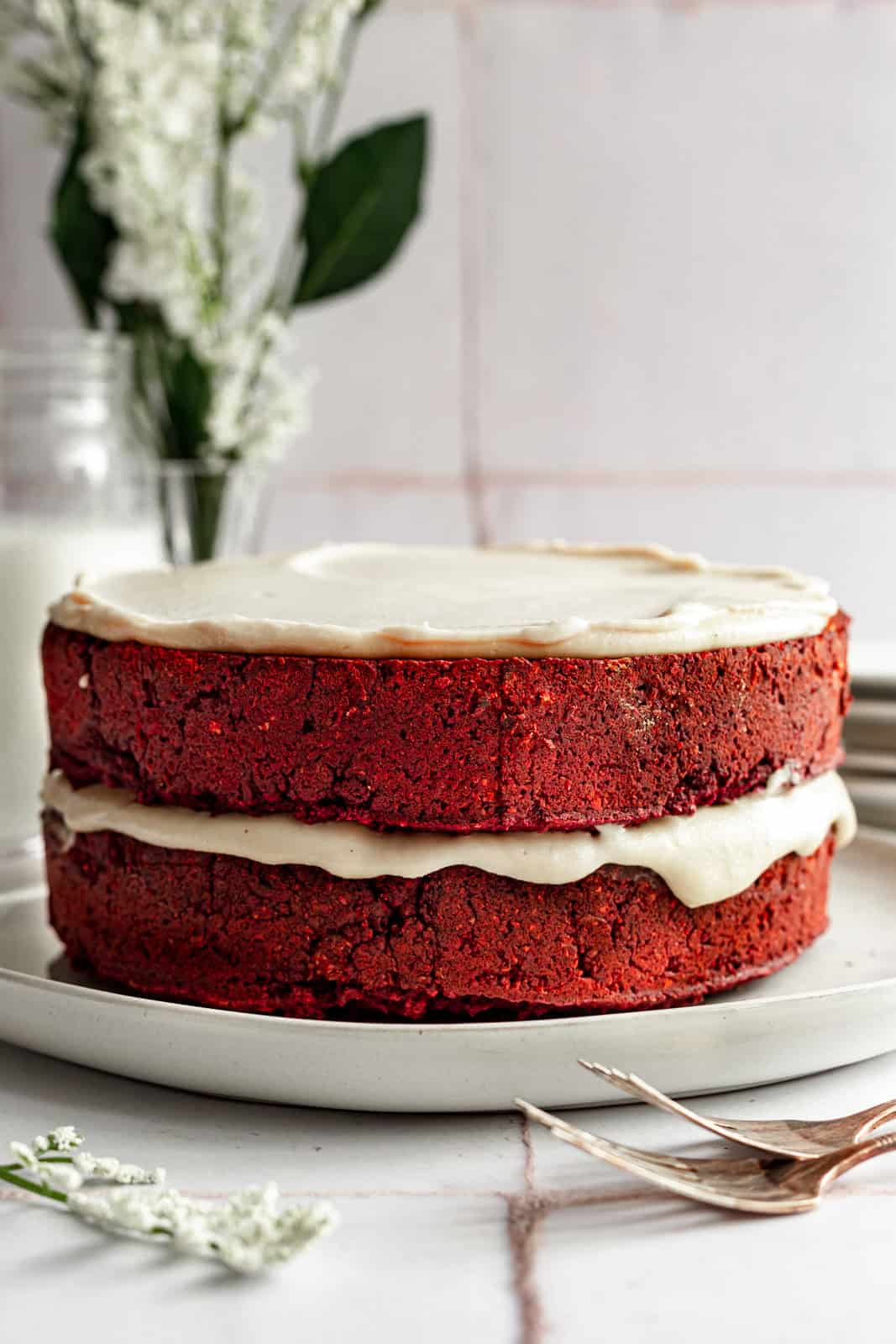
How to make Red Velvet Cake Plant-Based
Vegan baking can be tricky. And it's even more tricky to avoid refined & processed vegan products like vegan butter or vegan sugar that bakers often use as substitutes.
So there are a few tricks in this cake. It's not your typical ingredient list but it DOES result in a rich and decadent plant-based layer cake.
Tricks for a whole food plant-based cake
Moisture
To create that rich, moist cake that you expect in good baking, we need to get creative. Chickpeas add both and help bulk up the cake, so it doesn't feel like it's missing anything. Don't worry - you can't taste the chickpeas at all!
Fat
Baked goods need some fat to create a richness. Instead of using oil or butter, this cake has cashew butter, which is a great whole food fat source. Cashews are a sweeter nut which adds to the overall sweetness of the cake. They don't have much other flavor though, so they don't distract from the overall cake flavor.
Sugar
Most cakes use white sugar in the batter and powdered sugar in the frosting. As a less processed option, this cake uses maple syrup.
Color
You usually don't have to worry about color in a cake, but red velvet cakes use food coloring to create the rich red color.
Did you know that most red food dye is not vegan?! I don't know about you, but it freaks me out a little that food coloring isn't vegan. There are some vegan options out there, but for this recipe I opted for the whole food version - beets!
Beetroot powder is a pinkish red powder made from dried beets. It achieves that red color without any non-vegan ingredients sneaking in.
Why I love this Red Velvet Cake
- Dietary needs - this cake is vegan, gluten-free, dairy-free, oil-free, and refined sugar free. That's right! No vegan butter, no white flour, no sugar, AND made with whole foods.
- Naturally colored - did you know that most red food dye is not vegan?! I don't know about you, but it freaks me out a little that food coloring isn't vegan. There are some vegan options out there, but for this recipe I opted for the whole food version - beets!
- Protein & Fiber - there's a secret ingredient in this cake and it adds protein and fiber. This red velvet cake is by no means "high protein" but the extra nutrients help make this more of a balanced dish
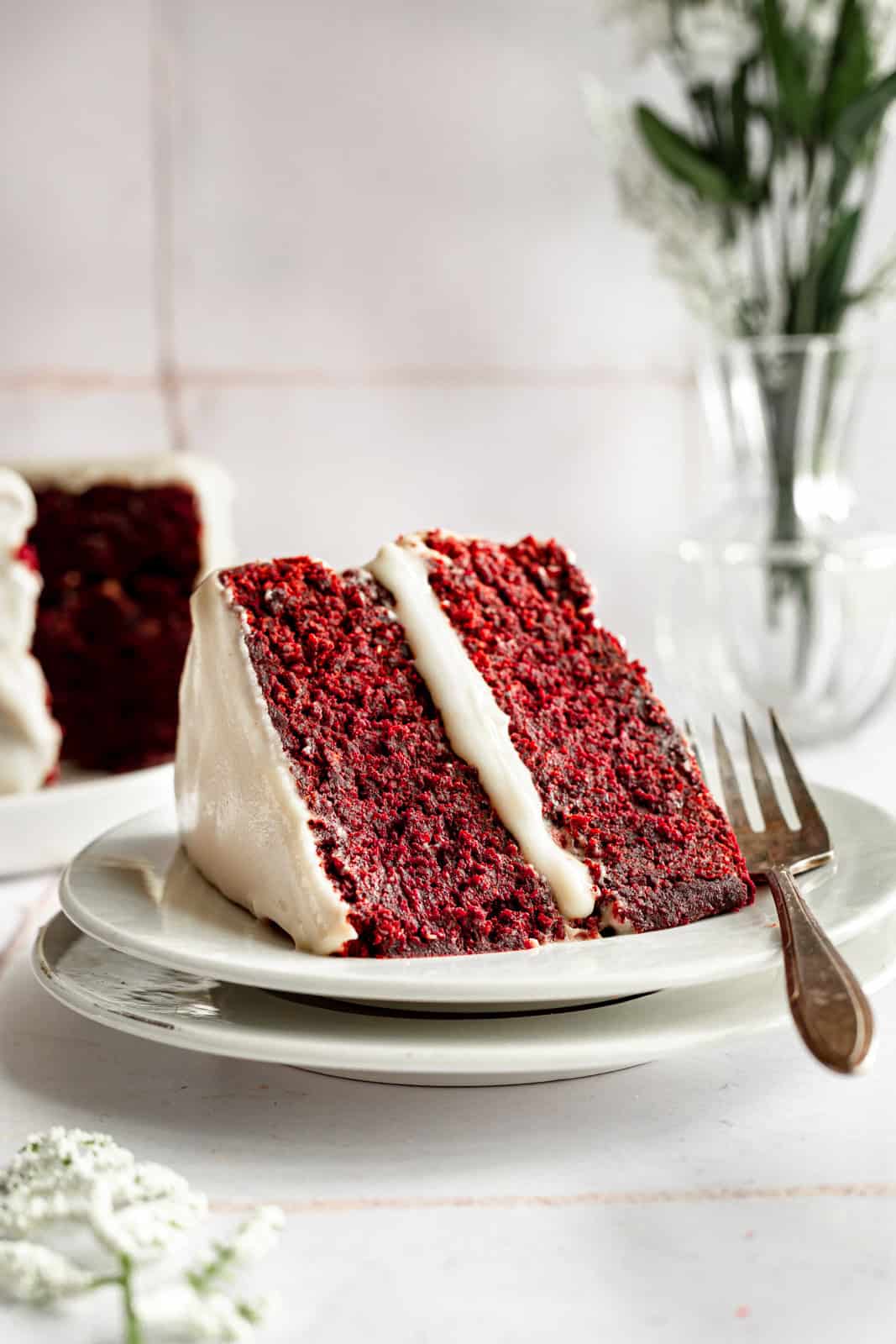
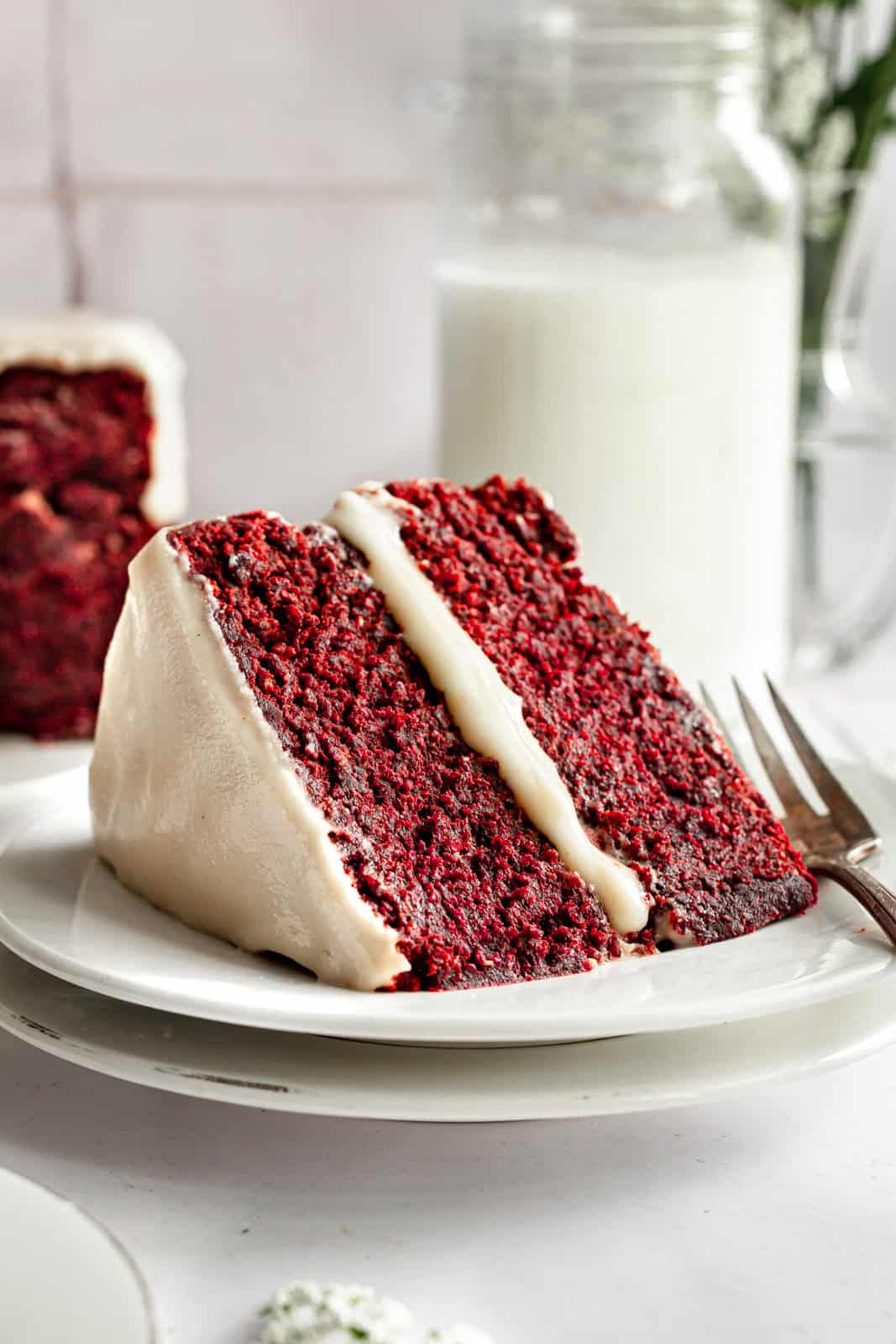
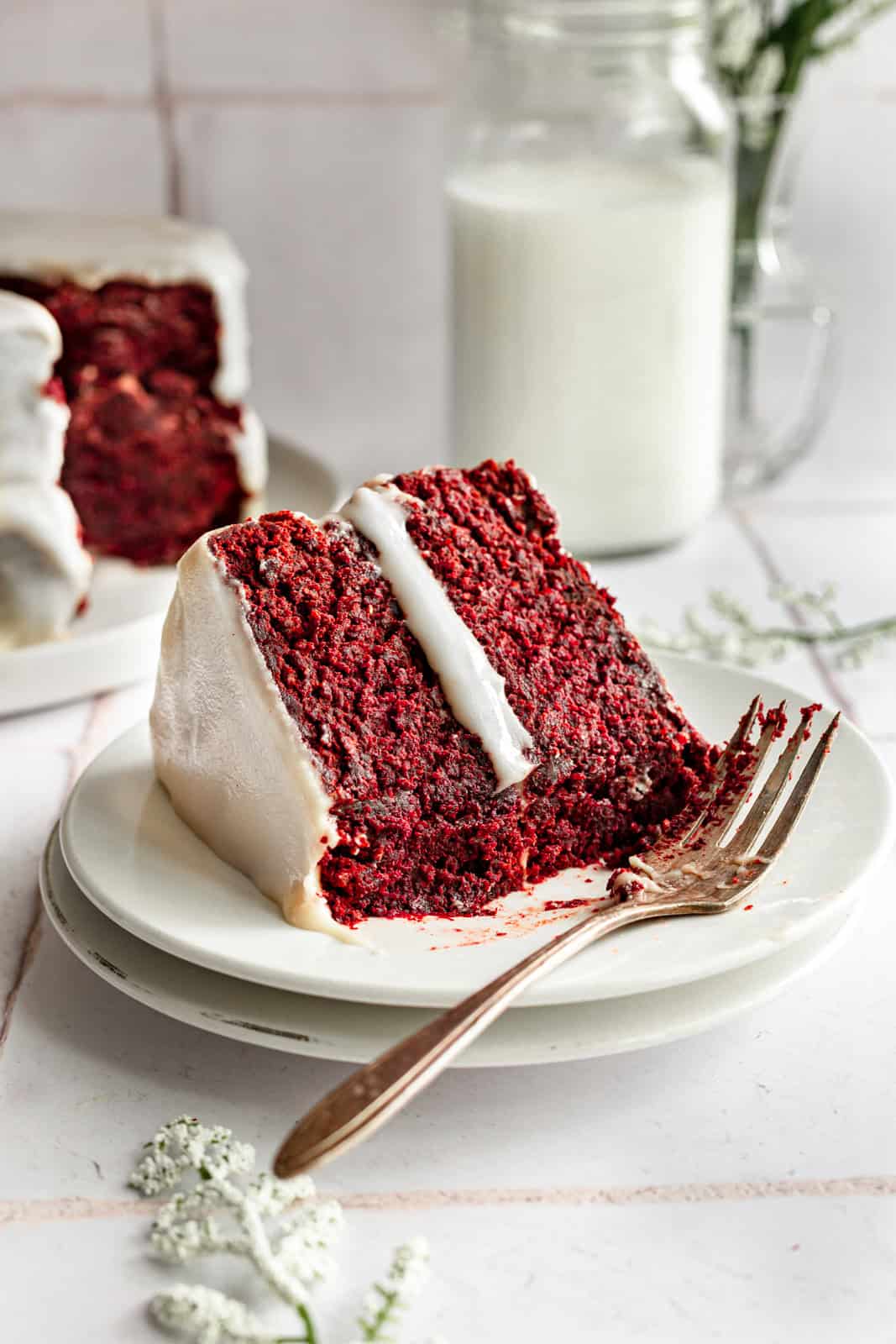
- Fudgy and rich - this is not a dry, crumbly cake. In fact, it is rich and fudgy and incredibly moist.
- Actually really simple - there aren't any crazy instructions. All you do is mix and bake.
Ingredient Notes & Substitutions
Cake
- Chickpeas: the secret ingredient! Chickpeas create that moist, fudgy texture. They add protein and fiber. AND you can't taste them! Canned chickpeas are perfect here - just be sure that they don't have any added salt.
- Maple Syrup: I highly recommend using maple syrup in this cake. You can use date syrup for a completely fruit-sweetened cake, but it will affect the color of the cake - it will be more brown than red.
- Cashew Butter: cashew butter is the fat source. You can also use almond butter.
- Vanilla Extract
- Oat Flour: I used homemade oat flour in this recipe. Just blend oats in your food processor until they are a flour consistency. You can use store-bought oat flour - the cake will be slightly more dense. You can also use all purpose flour.
- Beetroot Powder: this is how the cake gets its red color. Because we're not using a powerful food coloring, we have to use quite a bit of beetroot powder to get the red color. If you don't care about the color or don't want to use beetroot powder, you can just sub an equivalent amount of flour - this would result in a light brown cake.
- Cocoa Powder
- Salt
- Baking Powder
- Baking Soda

Frosting
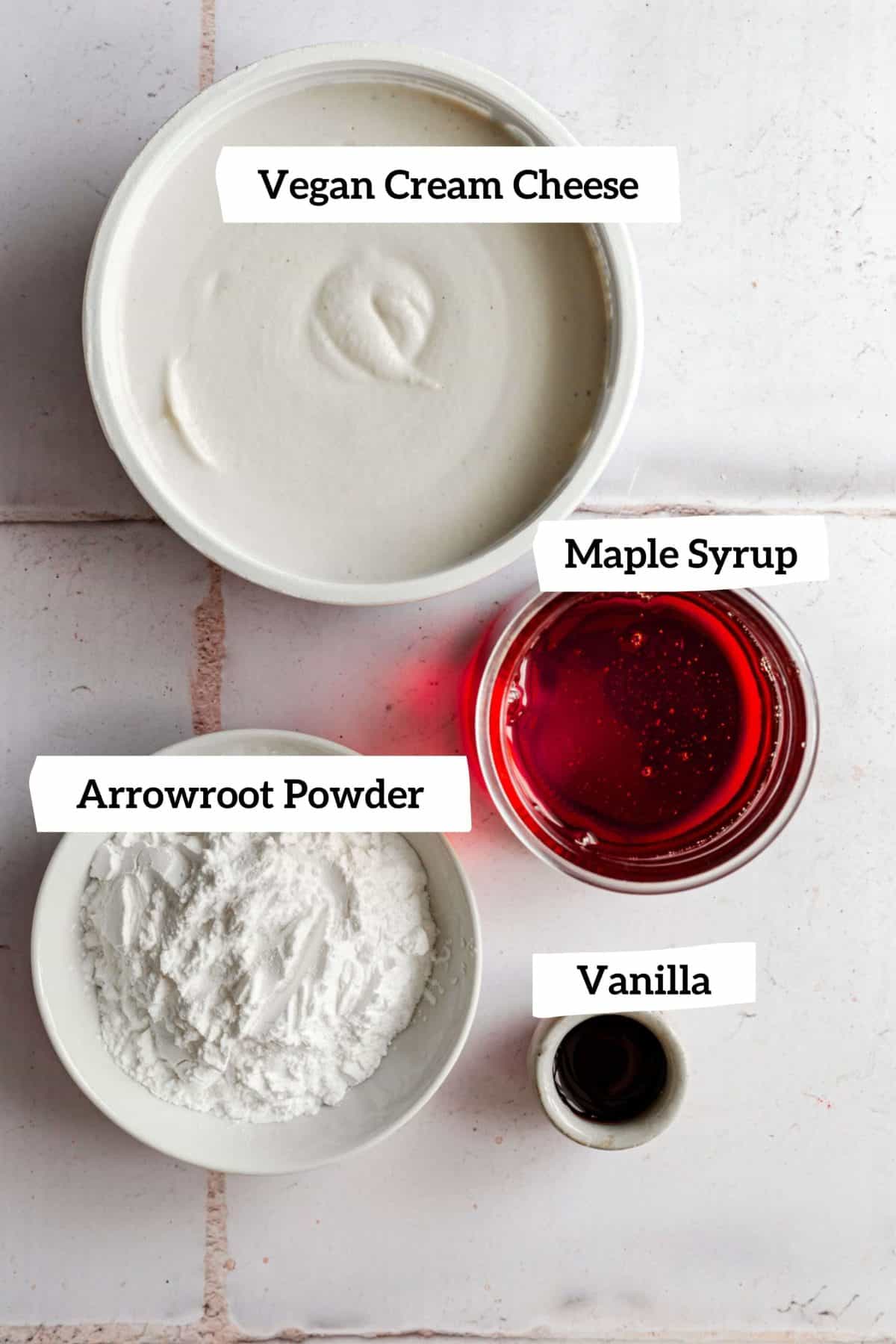
- Vegan Cream Cheese: I used Miyoko's vegan cream cheese - it is made with whole foods, without any oils or gums.
- Arrowroot Powder: Since the frosting has no butter, it needs to be thickened. Arrowroot powder is a starch that helps thicken the frosting without adding flavor. You can sub cornstarch.
- Maple Syrup: As noted above, you can use date syrup here for a completely fruit sweetened cake, but date syrup is dark and will change the color of the frosting.
- Vanilla Extract
How to make Plant-Based Red Velvet Cake
Step 1. Preheat the oven to 350°F. Line the bottom of two 8-inch cake pans with parchment paper.
Step 2. Add the chickpeas to a food processor or blender and process until the chickpeas are blended into a paste.

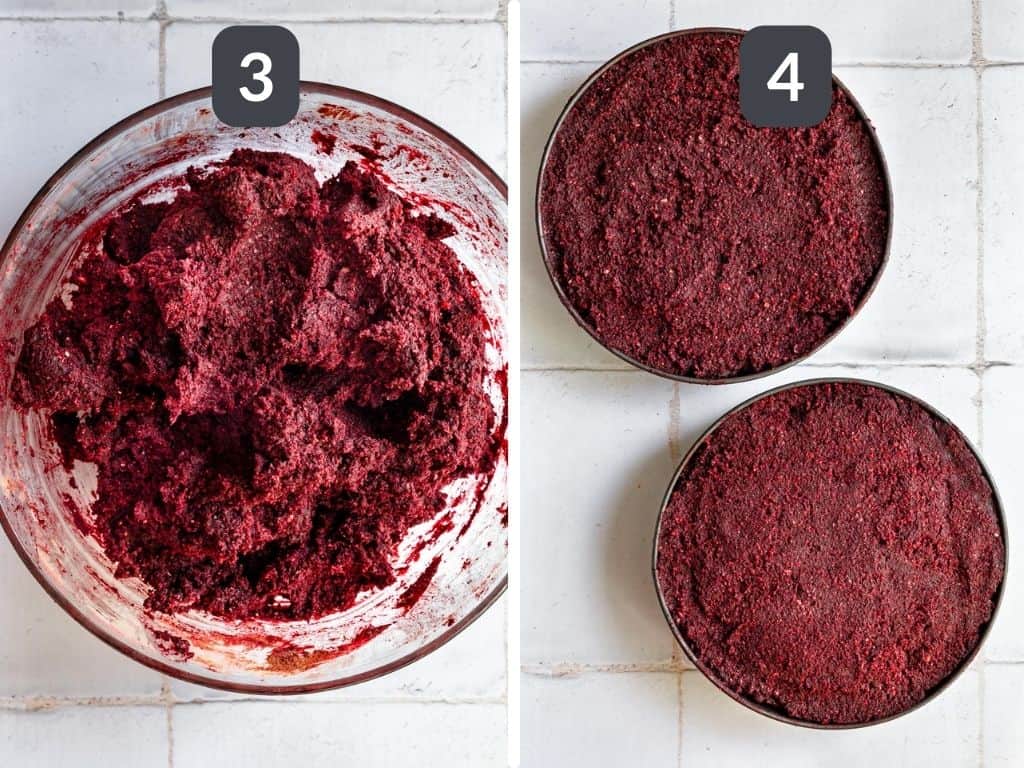
Step 3. Transfer the chickpea paste to a large bowl and add the remaining cake ingredients. Stir until everything is well combined.
Step 4. Divide evenly into the cake pans.
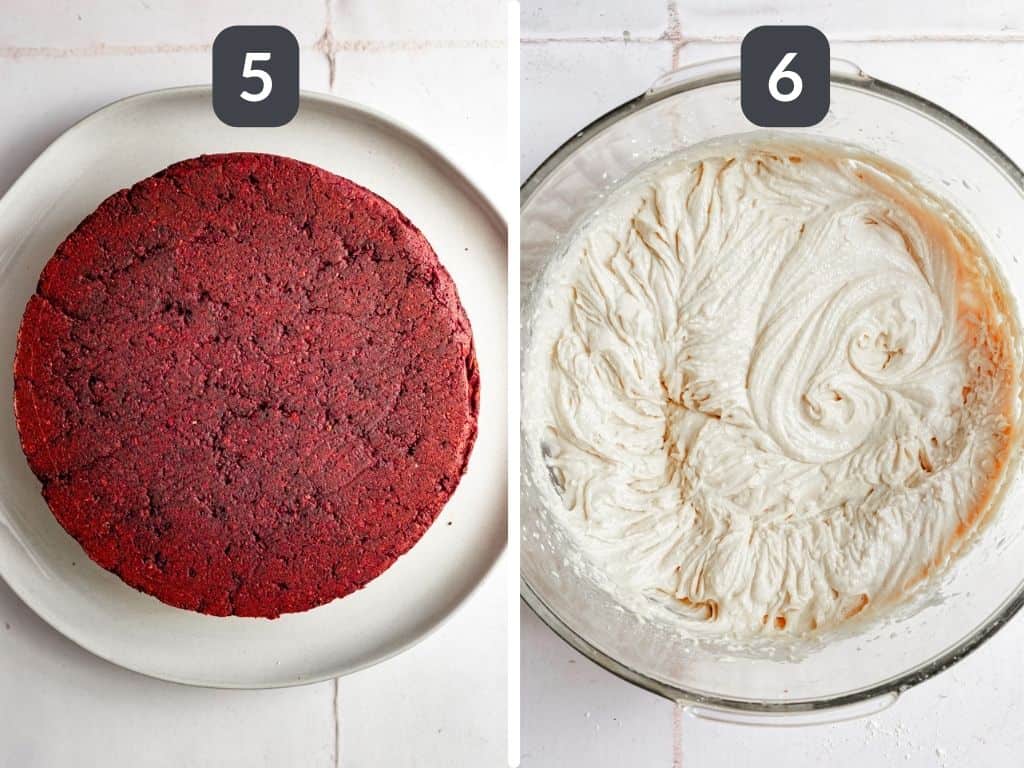
Step 5. Bake for 45-50 minutes, until a toothpick inserted in the center of a cake comes out clean and the center of each cake feels firm to the touch. Let the cakes cool completely (this is important!!). For best frosting results, refrigerate the cakes for 30-60 minutes before frosting.
Step 6. Meanwhile, prepare the frosting. Using a hand mixer or stand mixer beat the frosting ingredients until combined and slightly fluffy. Refrigerate until ready to use.
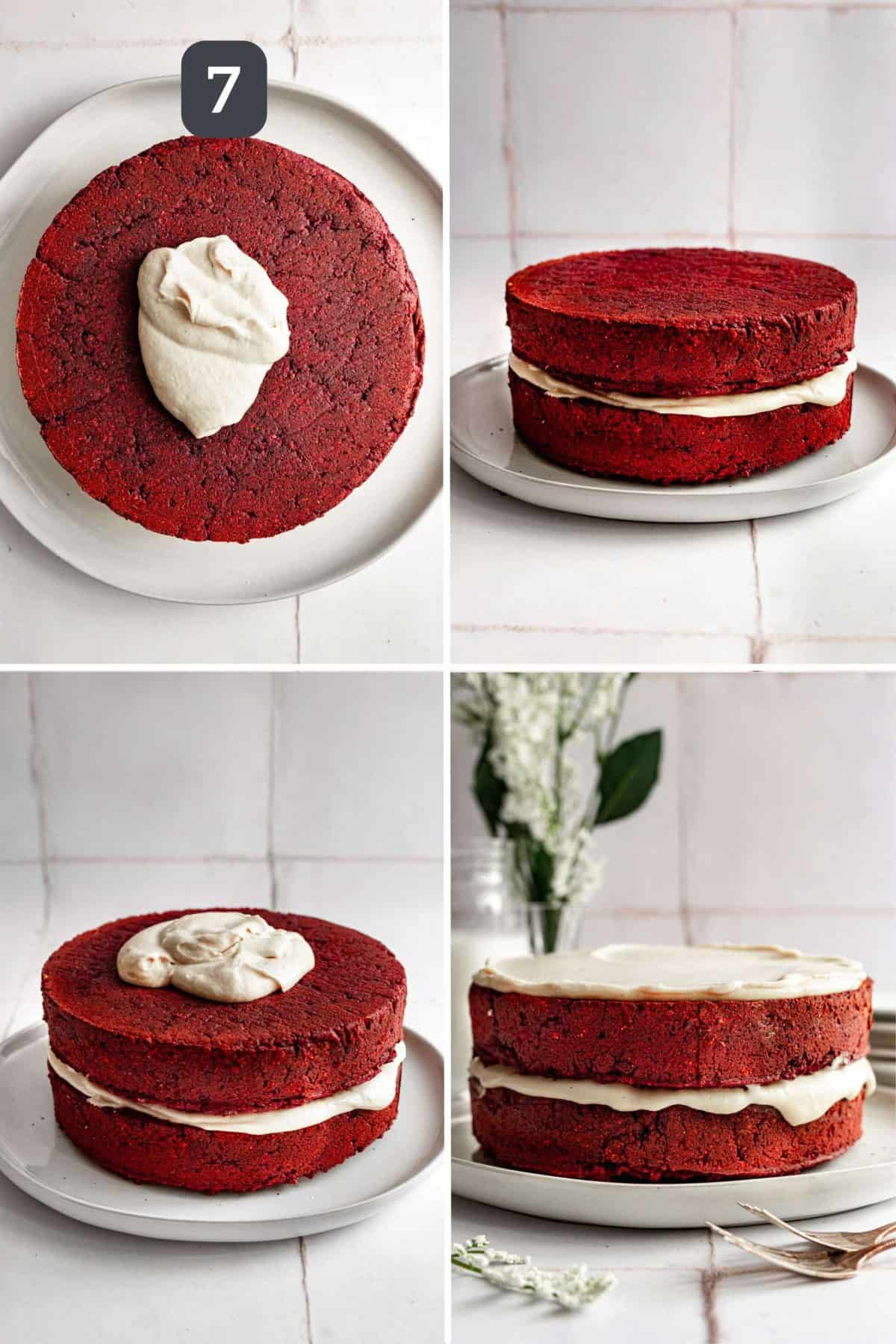
Step 7. When the cakes are cooled, spread half of the frosting on top of one cake. Then top with the second cake. Spread the other half of the frosting on top. Serve and enjoy!
FAQ & Expert Tips
You can make this recipe in a 9-inch cake pan instead - the layers will be shorter and the cake will be wider.
You can also make this cake in a 9x13-inch sheet pan.
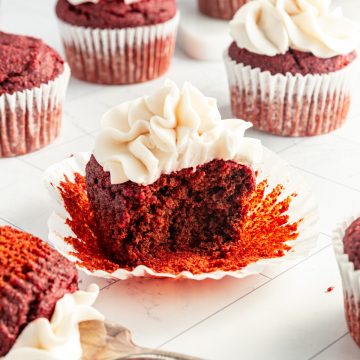
Alternatively, turn this recipe into cupcakes. It makes about 3 dozen.
This cake is gluten-free. Oats are naturally gluten-free. If you have a strong sensitivity, look for certified gluten-free oats to avoid cross contamination.
If you aren't gluten-free, you can still use oat flour - blend your own or buy it from the store. You could also use all purpose flour.
I've tested multiple versions of this cake in an attempt to avoid using a powder. Unfortunately, if you want the red color, beetroot powder is the best option.
You can also use pink pitaya powder - this is what I used in a previous version of my red velvet cupcake recipe and it worked fairly well.
If you don't care about the color, you can omit the beetroot powder altogether and replace it with more flour. Alternatively, you can try a vegan food coloring.
To frost any cake, you'll want an offset spatula. It makes things so much easier.
If you don't have an offset spatula you can use a regular knife.
I recommend frosting only the top of this cake, not the sides.
Since it doesn't have any butter, the frosting is thinner than a normal cream cheese frosting. Unless it is really cold, it will slide off the sides of the cake.
If you want to attempt to frost the sides of the cake, you should make the frosting thicker. You have two options:
Add more arrowroot powder. This will thicken the frosting, but if you add too much you will dilute the sweetness.
Use vegan powdered sugar. This is definitely not whole food plant-based, but if you want the effect of a fully frosted cake, this is a great option.
By far the most difficult part of the cake is the layering and frosting. For a simpler approach, make cupcakes instead. This recipe will make 3 dozen cupcakes.
Store this cake in the refrigerator for up to a week.
The cake can also be sliced and frozen. If you know you will be freezing part of the cake, don't frost the parts you will freeze.
Recipe Prayer
Thank you God for this cake. Remain with us as we celebrate birthdays, holidays, and time with friends. Amen.
More plant-based cakes and cupcakes
Tried this recipe?
Please leave a review in the comments section below. You can also stay in touch with me on social media by following me on Instagram, Pinterest, and TikTok or by subscribing to my newsletter.
📖 Recipe
Plant-Based Red Velvet Cake
Equipment
Ingredients
Cake
- 3 15 Ounce Cans Chickpeas drained and rinsed
- 2 ½ Cups Maple Syrup
- 1 ½ Cup Cashew Butter
- 2 Tablespoons Vanilla Extract
- 3 Cups Oat Flour
- 2 Cups Beetroot Powder
- ½ Cup Cocoa Powder
- 2 Teaspoons Salt
- 1 ½ Teaspoons Baking Powder
- 1 ½ Teaspoons Baking Soda
Frosting
- 16 Ounces Vegan Cream Cheese
- ⅓ Cup Arrowroot Powder
- ⅓ Cup Maple Syrup
- 1 Teaspoon Vanilla Extract
Instructions
- Preheat the oven to 350°F. Line the bottom of two 8-inch cake pans with parchment paper.
- Add the chickpeas to a food processor or blender and process until the chickpeas are blended into a paste.
- Transfer the chickpea paste to a large bowl and add the remaining cake ingredients. Stir until everything is well combined.
- Divide evenly into the cake pans.
- Bake for 45-50 minutes, until a toothpick inserted in the center of a cake comes out clean and the center of each cake feels firm to the touch. Let the cakes cool completely (this is important!!). For best frosting results, refrigerate the cakes for 30-60 minutes before frosting.
- Meanwhile, prepare the frosting. Using a hand mixer or stand mixer beat the frosting ingredients until combined and slightly fluffy. Refrigerate until ready to use.
- When the cakes are cooled, spread half of the frosting on top of one cake. Then top with the second cake. Spread the other half of the frosting on top. Serve and enjoy!
Nutrition
Nutrition information is an estimate.
Comments
No Comments