

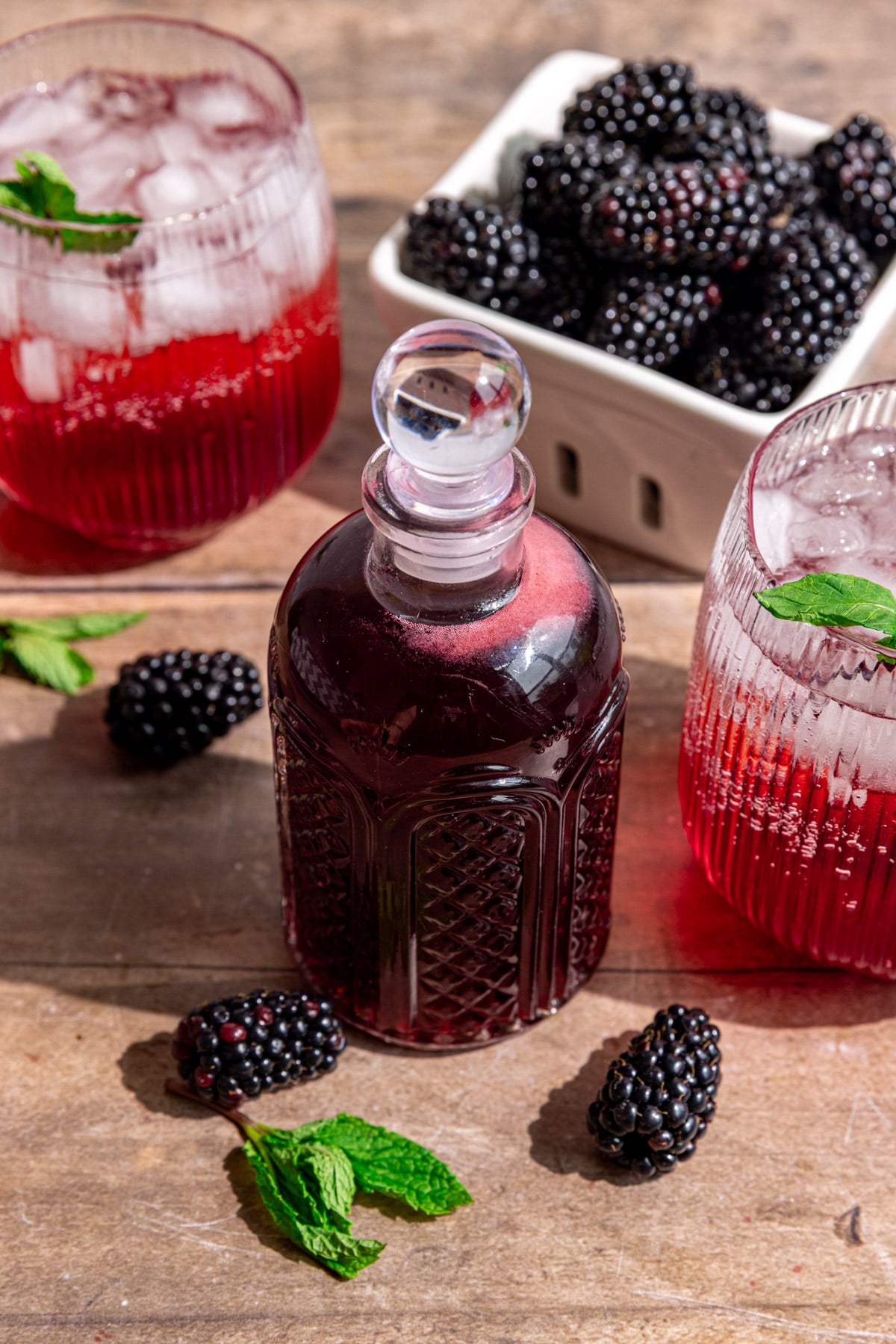
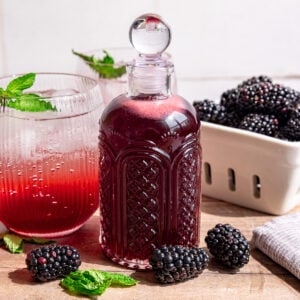
This Blackberry Shrub is a tangy, fruit-forward cocktail concentrate. It's a tangy, sweet syrup, perfect for quick cocktails and mocktails.
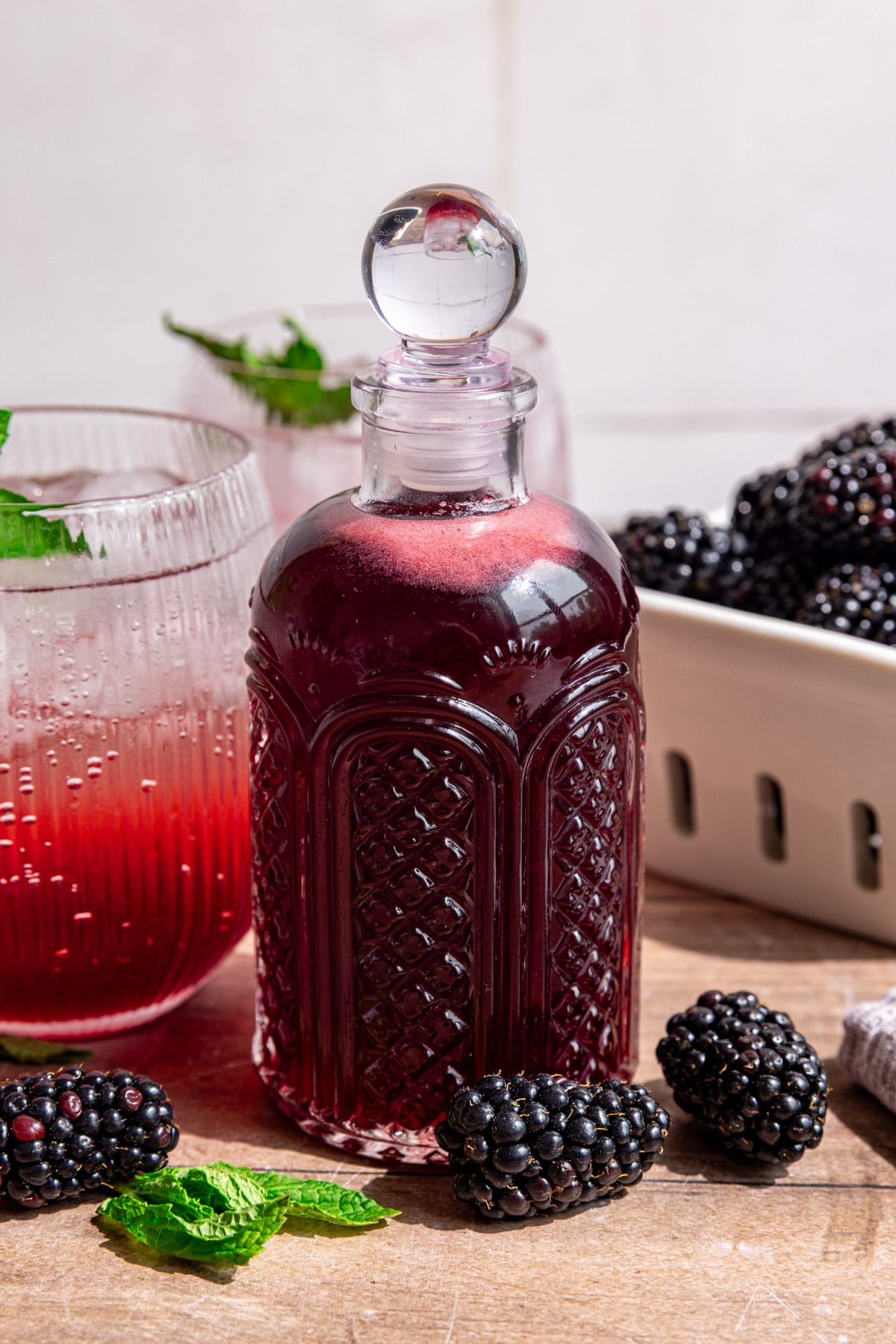
My family and I recently went on vacation to South Carolina, and a nice restaurant in Charleston served blackberry shrub as a mocktail. I was immediately intrigued because I'd never heard of shrub before.
The drink was delicious, fruity, tangy, and refreshing. I did some research and discovered shrubs as a vast category of drinks that can be made basically any flavor, with any combination of ingredients.
I'm so excited to share my blackberry shrub recipe and to experiment with future shrub flavors.
Jump to:
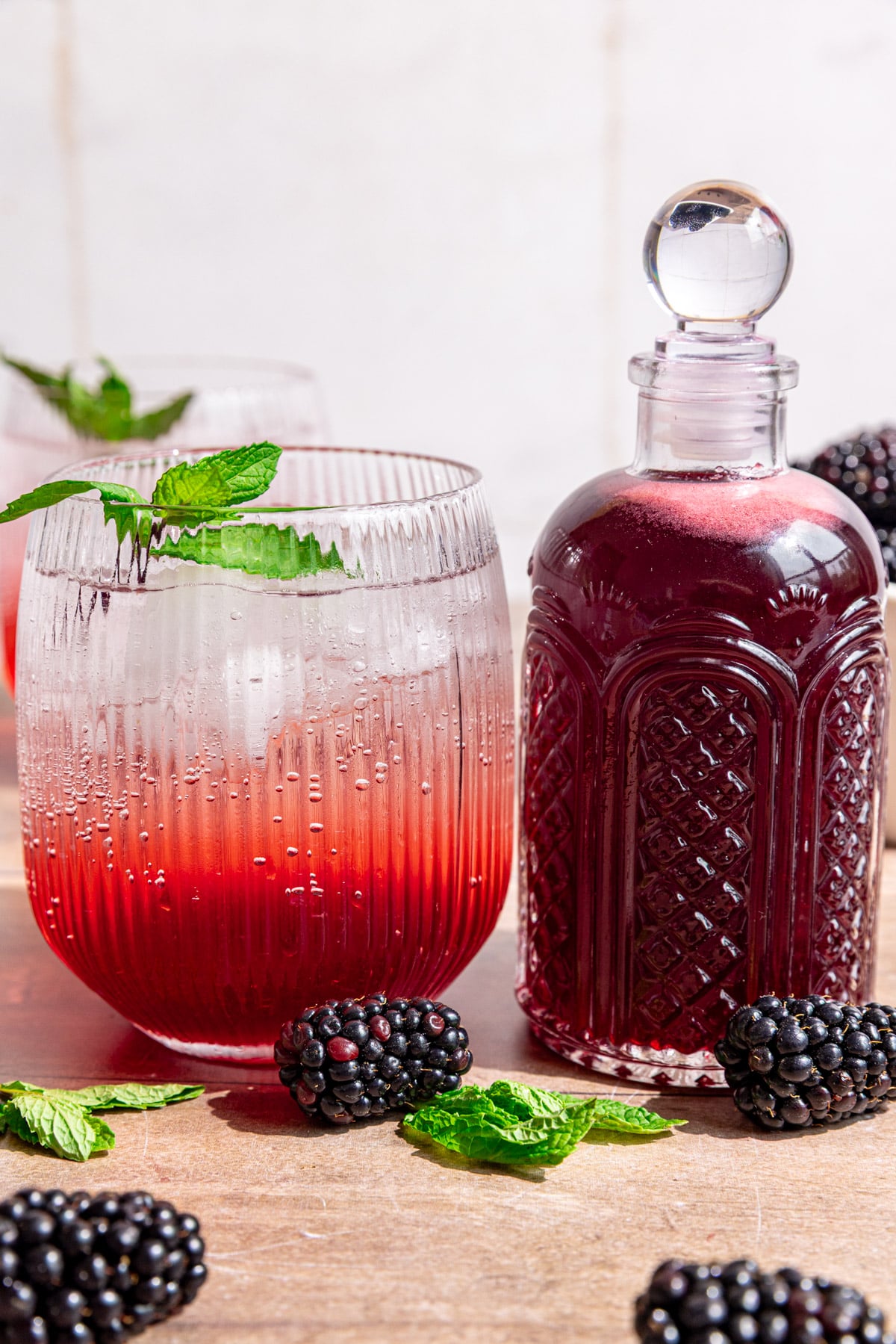
What Is a Shrub?
A shrub is a fruit-based syrup made with vinegar, sugar, and fruit. Long before refrigeration, shrubs were used as a way to preserve seasonal fruit while creating a flavorful concentrate for drinks.
Today, shrubs are popular in mocktails and cocktails because they add acidity, complexity, and depth.
My shrub recipe includes both a quick version and the classic method, so you can choose what works for you.
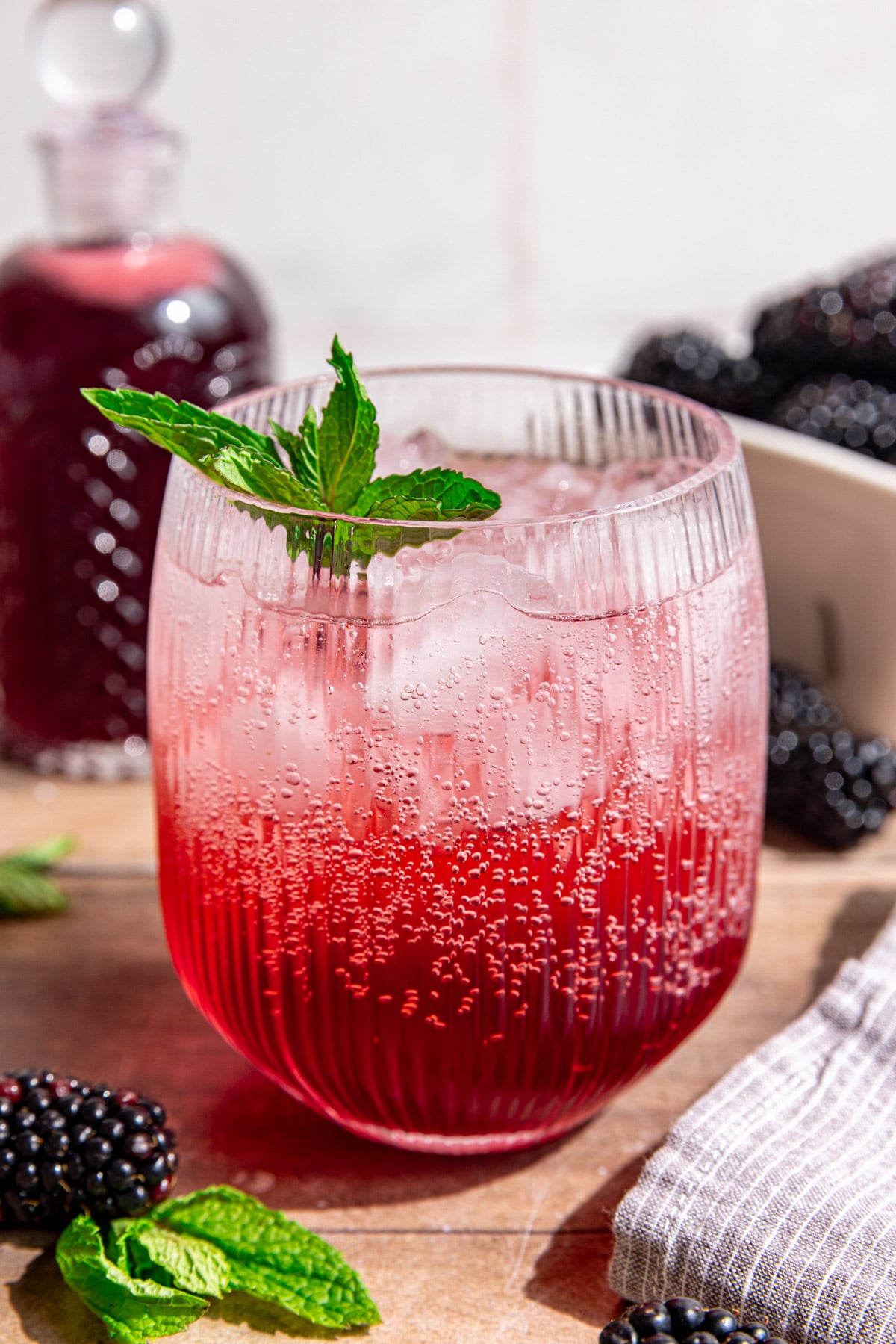
Why You'll Love This Blackberry Shrub
- Super simple mocktail base - once you make shrub you don't need any other mix-ins, just top with sparkling water
- Sweet & Tangy - A unique balance of fruit and acidity
- Great Way to Use Blackberries - Especially during peak season
- Easy to Customize - Adjust sweetness and acidity to taste
Ingredient Notes & Substitutions
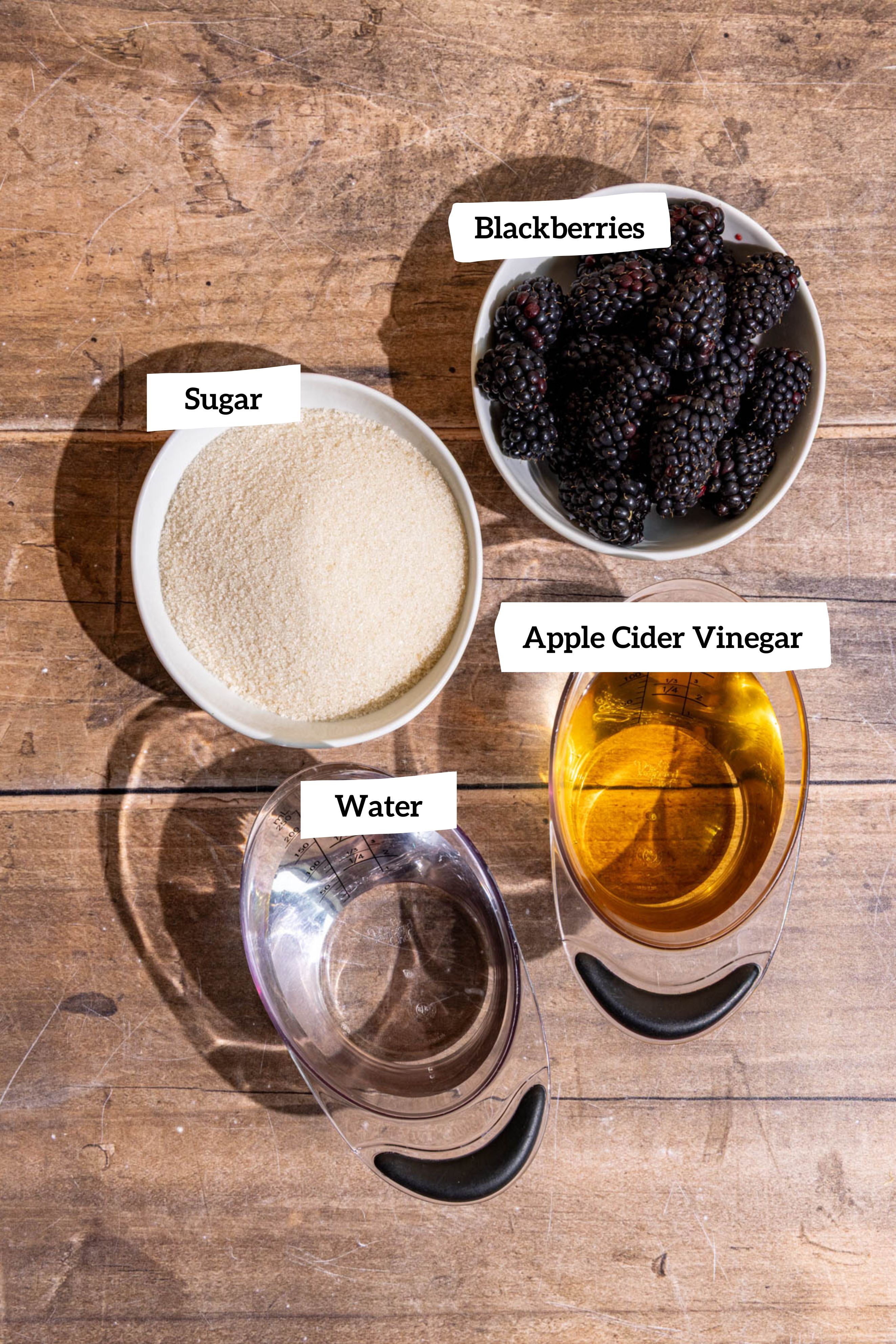
- Blackberries: fresh or frozen both work well
- Sugar: I used organic cane sugar, but you can sub an equivalent amount of agave for a refined sugar free version. Sugar provides some extra sweetness to balance the tart vinegar.
- Apple Cider Vinegar: all shrubs include some type of vinegar. I chose apple cider vinegar because it's easily accessible and pairs nicely with blackberries. I like to go easy on the vinegar at first, so I recommend a range. Start with the lower end of the range and adjust up to your taste.
- Water: if you are making the quicker hot process version. Omit if you're using the cold process.
Step-By-Step Instructions
For hot process
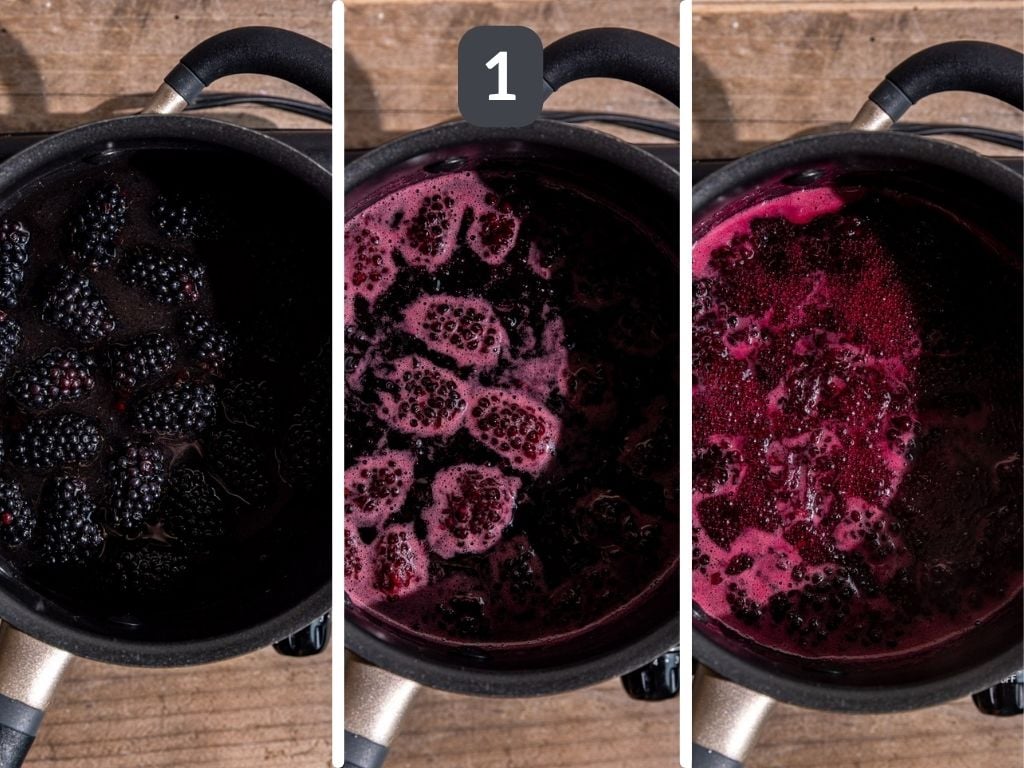
Step 1. Add the sugar, water, and blackberries to a small saucepan. Bring to a simmer and let cook, stirring occasionally for 5 minutes.
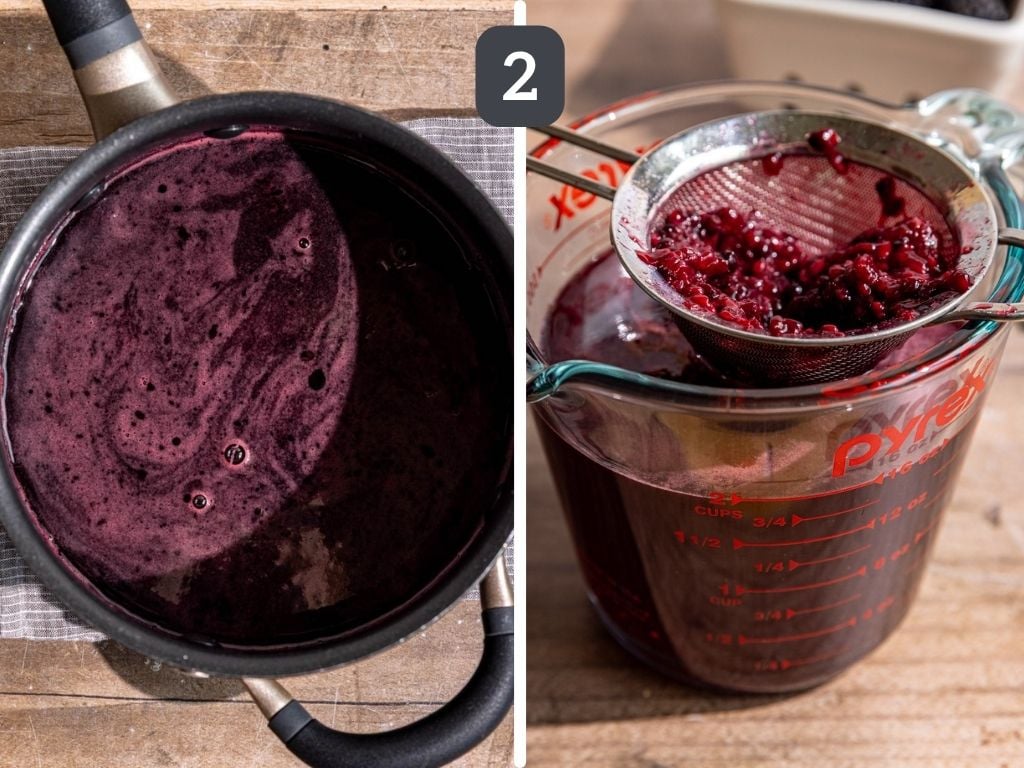
Step 2. Remove from the heat and stir in the vinegar. Let cool for at least 10-15 minutes, then strain through a fine mesh strainer.
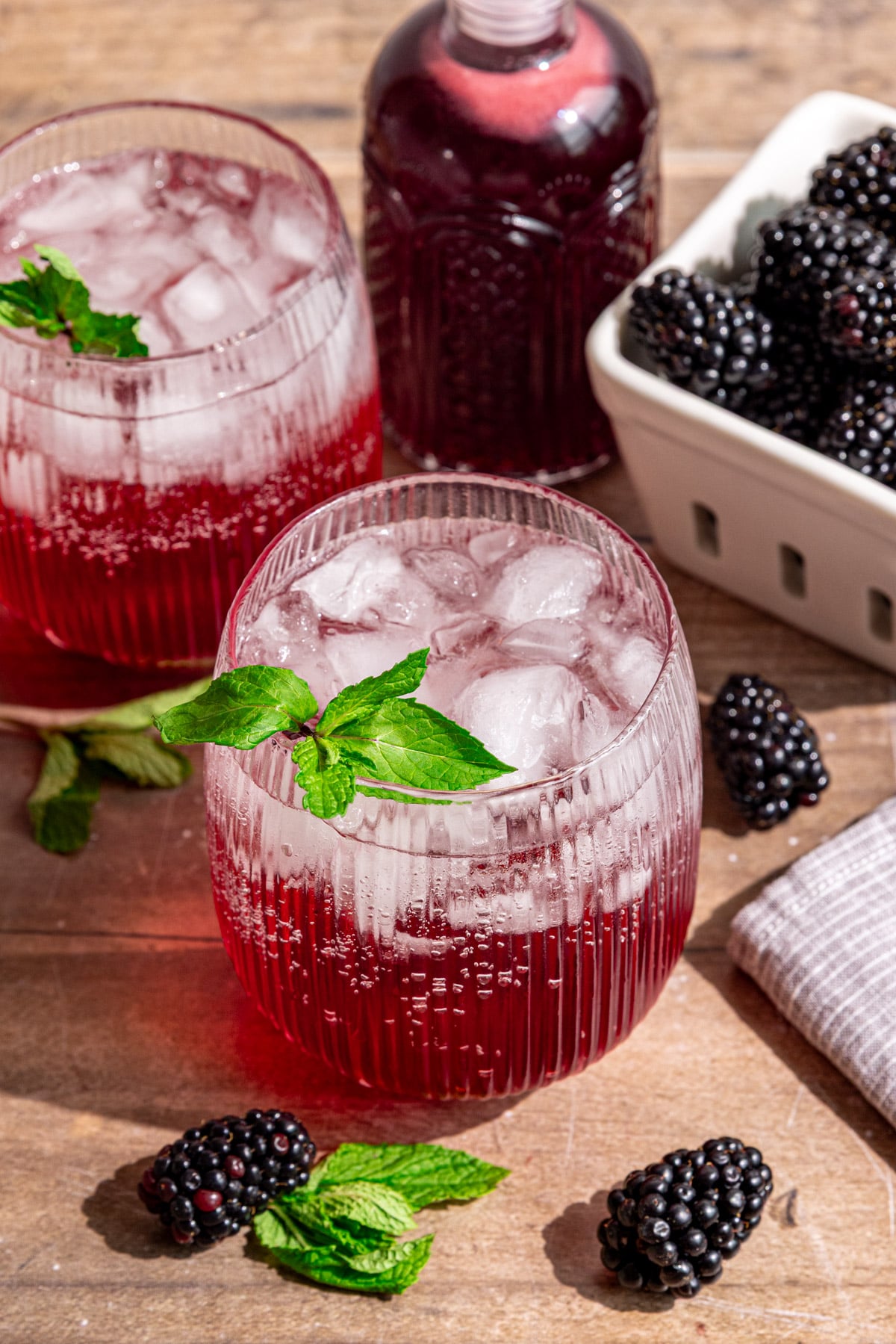
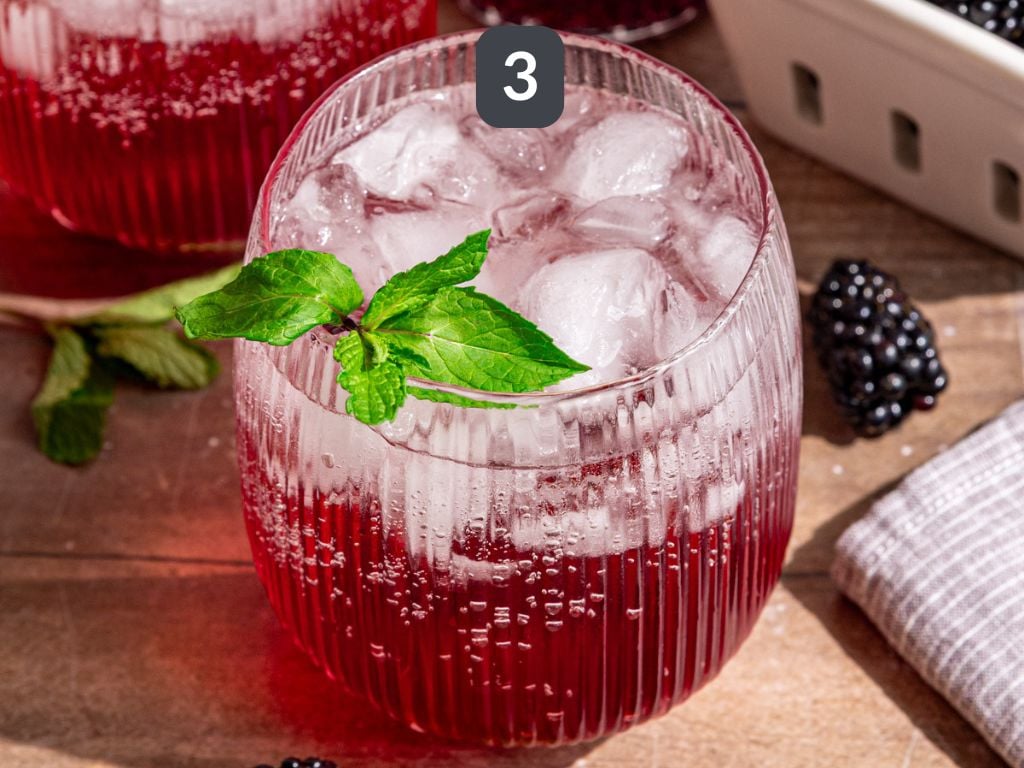
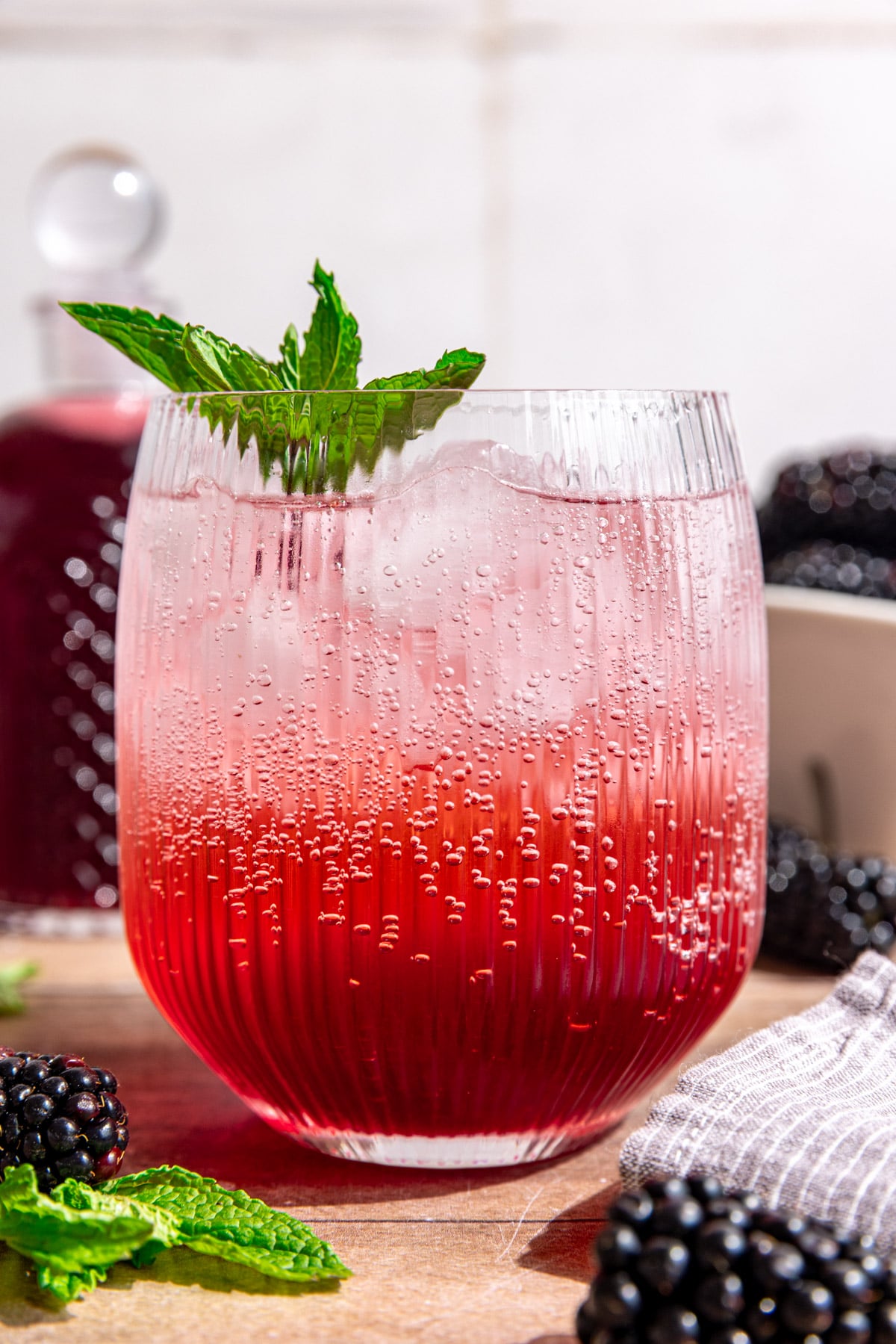
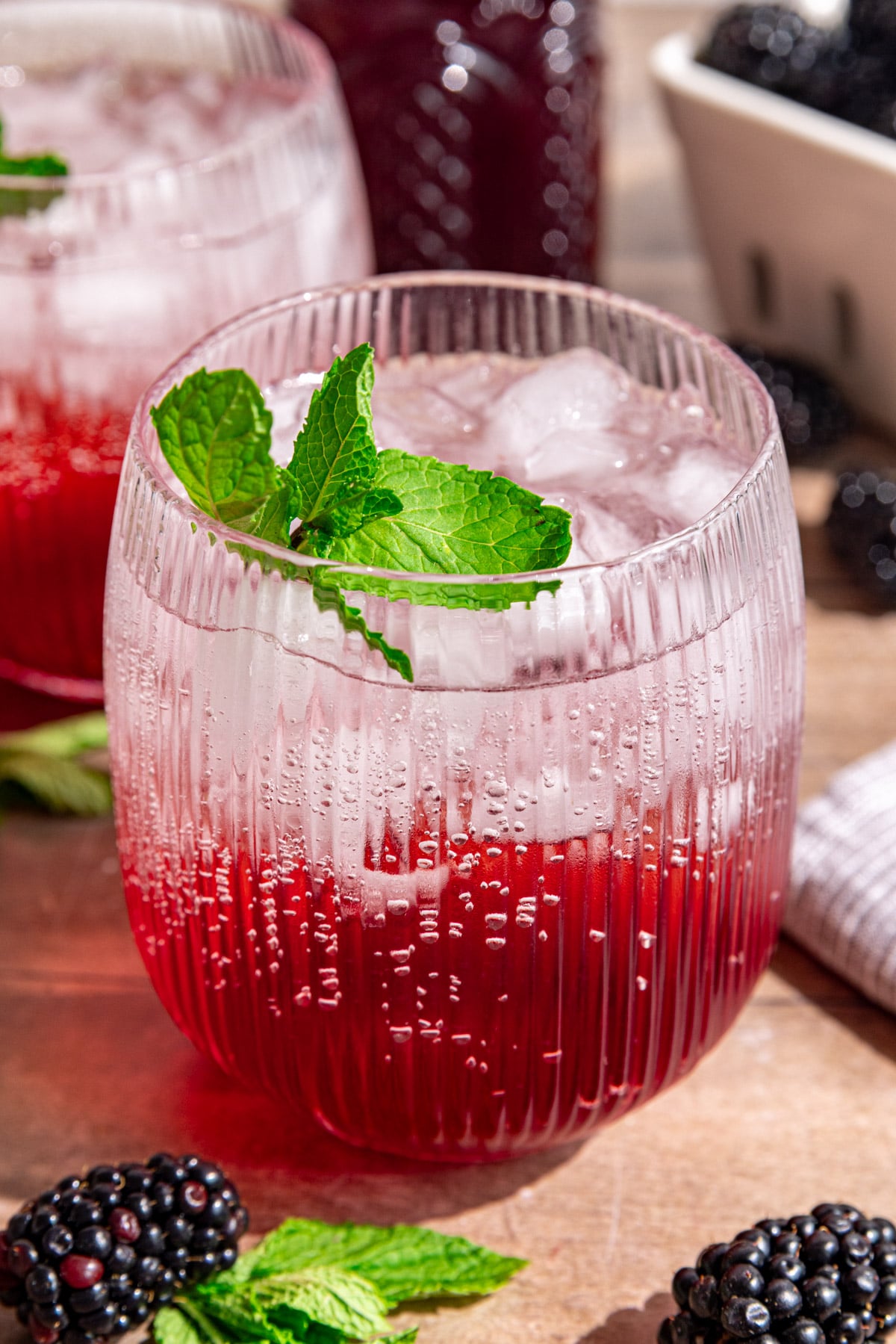
Step 3. Serve 1-2 ounces of shrub as a mocktail topped with club soda and a garnish of fresh mint.
For cold process
Step 1. Mix the sugar and blackberries in a medium bowl or large mason jar, mashing the berries slightly as you mix.
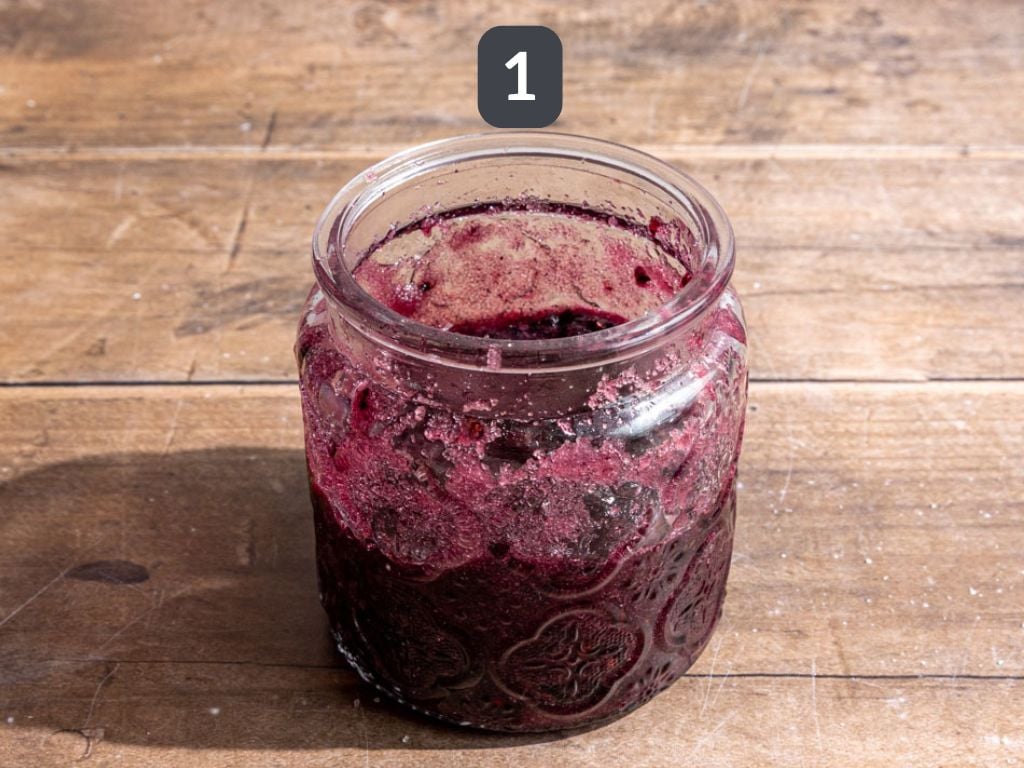
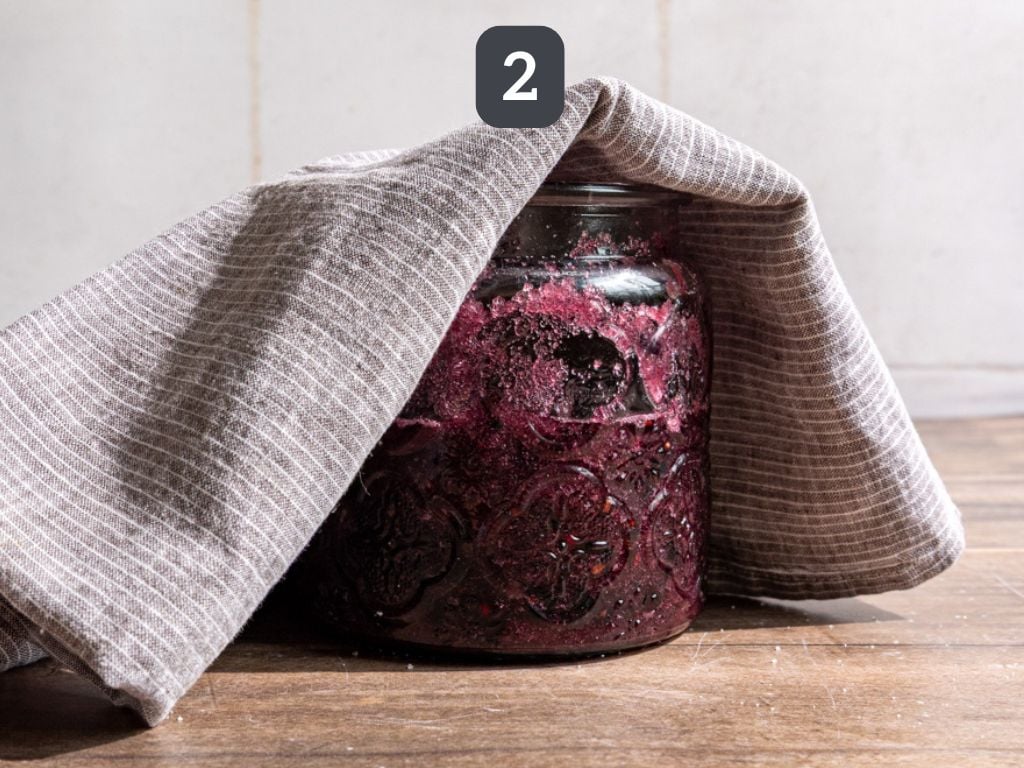
Step 2. Cover with a towel and let sit for 24 hours.
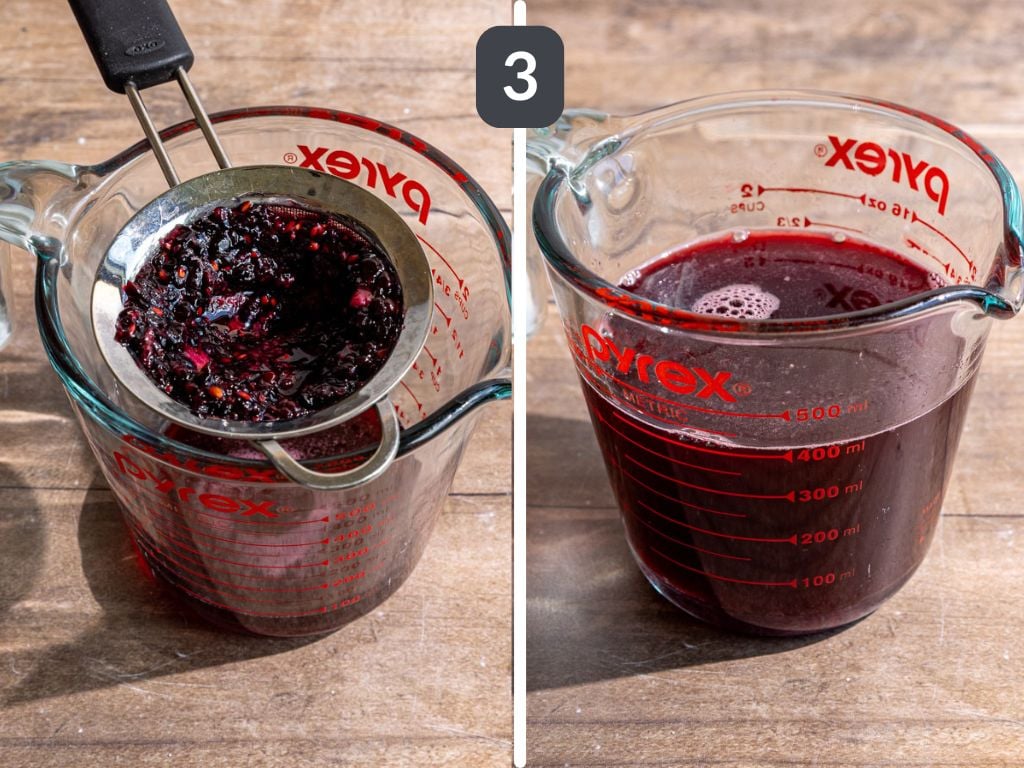
Step 3. Strain and discard the berries. Then mix in the vinegar. Taste and add more vinegar to your preference.
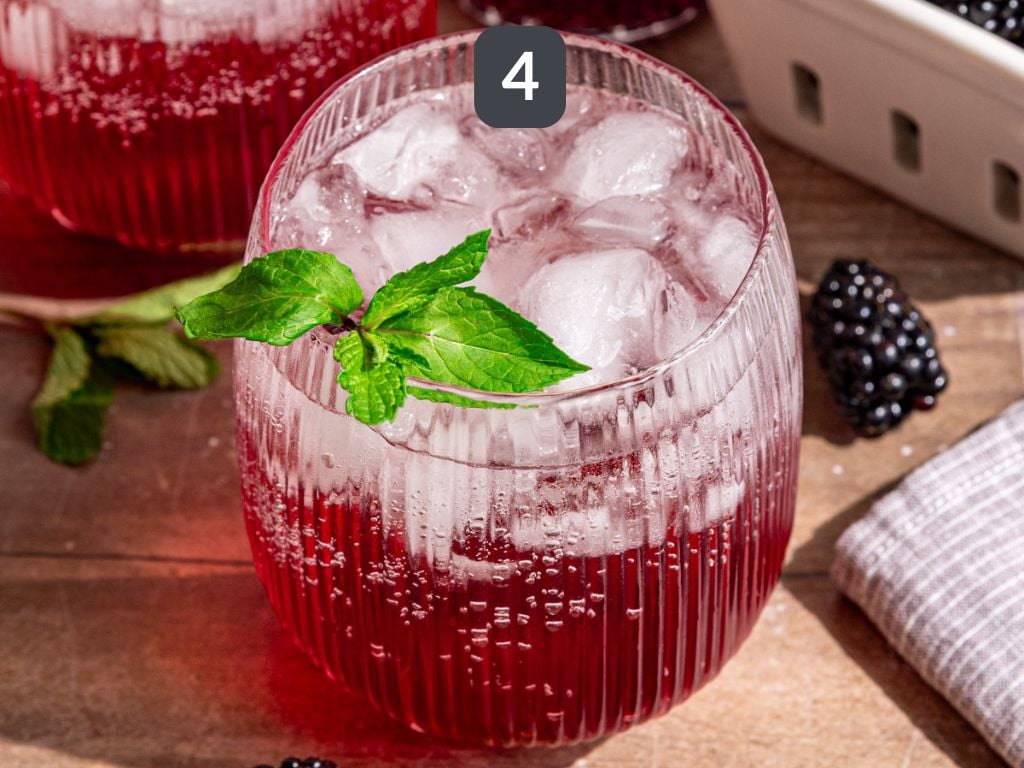
Step 4. Serve 1-2 ounces of shrub as a mocktail topped with club soda and a garnish of fresh mint.
More Ways To Use Blackberry Shrub
- For blackberry lemonade
- Stirred into iced tea
- As a mocktail (this recipe!)
- Sangria drinks
- Drizzled over fruit salad
- Added to vinaigrettes
Elizabeth's Kitchen Notes
- Quick shrub vs. classic shrub: I've listed two preparation methods: hot process and cold process. Hot process is a quick shrub, which can be used the same day it's made. It involves heating the sugar and berries like a syrup before adding the vinegar. Classic, cold process shrub skips the heat and instead involves macerating the fruit and sugar, letting it sit for a day or two, and then adding the vinegar. Both are delicious - pick whichever you prefer and have time for.
- Add your own flavors: like I added mint to the final mocktail, you can add herbs or flavors to the shrub syrup itself. Feel free to experiment with different herbs and spices!
- Vinegar: traditional shrub is 1:1:1 ratio. Equal parts sugar, fruit, and vinegar. I've found that this is a bit too much vinegar for me. While I do list the classic vinegar amount in the recipe below, I recommend starting with less (also listed below) and adding more if you find the drink too sweet. The drink should feel balanced, not too sweet or too tart.
FAQ & Expert Tips
This blackberry shrub is fruity and tart. It mimics the bite of alcohol, while also being like a syrup. My best description is that it's a tart version of simple syrup.
Because of the vinegar, shrub can last months, especially if refrigerated.
Yes! Sub 1:1 for fresh blackberries.
Oh yes. Raspberries, strawberries, and blueberries all work well.
Recipe Prayer
Jesus thank you for this delicious drink. Amen.
Related Recipes
Tried this recipe?
Please leave a review in the comments section below and post on Instagram tagging me @elizabeths_table. You can also stay in touch with me on social media by following me on Instagram, Pinterest, and TikTok or by subscribing to my newsletter.
📖 Recipe
Easy Blackberry Shrub
Ingredients
- 200 Grams Organic White Sugar
- 200 Grams Fresh Blackberries
- 200 Grams Water for hot process only; omit if doing cold process
- 150-200 Grams Apple Cider Vinegar to taste - start with the lower amount and add more as desired
For a mocktail
- Club Soda
- Fresh Mint
- 1-2 Ounces Blackberry Shrub
Instructions
For a quick hot process shrub
- Add the sugar, water, and blackberries to a small saucepan. Bring to a simmer and let cook, stirring occasionally for 5 minutes.
- Remove from the heat and stir in the vinegar. Let cool for at least 10-15 minutes, then strain through a fine mesh strainer. Taste and add more vinegar to your preference.
- Serve 1-2 ounces of shrub as a mocktail topped with club soda and a garnish of fresh mint.
For a classic cold process shrub
- Mix the sugar and blackberries in a medium bowl or large mason jar, mashing the berries slightly as you mix.
- Cover with a towel and let sit for 24 hours.
- Strain and discard the berries. Then mix in the vinegar. Taste and add more vinegar to your preference.
- Serve 1-2 ounces of shrub as a mocktail topped with club soda and a garnish of fresh mint.
Video
Notes
Cold Process Yield: 1 ¾ cups / 400ml Nutrition Facts calculated for a mocktail using 1 ounce of blackberry shrub.
Nutrition
Nutrition information is an estimate.
Comments
No Comments